ASTM A387 Grade 11 and Grade 22 steel plates are heat-treated chromium-molybdenum alloy steels developed for welded boilers and pressure vessels operating at elevated temperatures. Grade 11 uses a nominal 1.25Cr-0.5Mo alloy system, while Grade 22 increases the alloy level to approximately 2.25Cr-1Mo. Chromium contributes to oxidation resistance and high-temperature stability, while molybdenum supports strength retention and creep resistance under sustained thermal loading. These plates are used for pressure-vessel shells, boiler components, heat exchangers, refinery reactors and other petrochemical or power-generation equipment where carbon steel does not provide sufficient elevated-temperature performance.
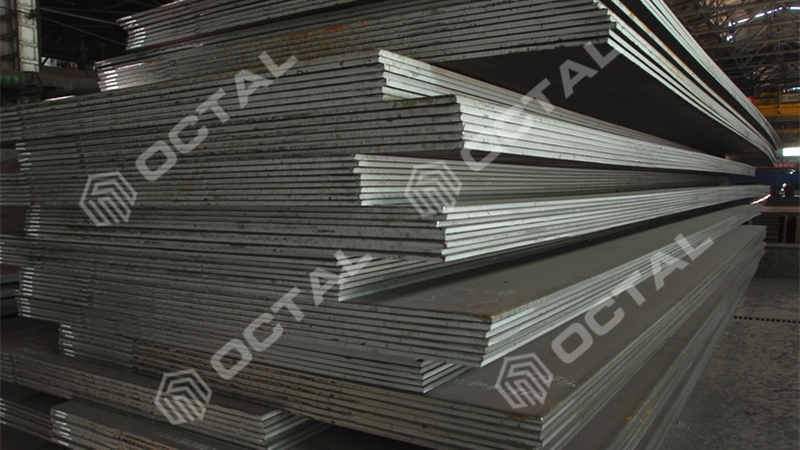
Key Properties
- Chromium-Molybdenum Alloy System: ASTM A387 Grade 11 uses a nominal 1.25% chromium and 0.50% molybdenum composition, while Grade 22 contains approximately 2.25% chromium and 1.00% molybdenum. The Cr-Mo alloy system supports strength retention and material stability during elevated-temperature service.
- Grade and Strength Class: ASTM A387 includes several chromium-molybdenum grades for different alloy and service requirements. Grade 11 and Grade 22 are commonly specified for welded pressure equipment, with the required mechanical properties determined by the applicable grade and class.
- Elevated-Temperature Service: Compared with ordinary carbon steel plate, A387 Cr-Mo plate is intended for equipment exposed to sustained pressure and elevated temperature, particularly where long-term thermal loading becomes an important design consideration.
Applications:
ASTM A387 chrome moly steel plates are used for pressure-containing equipment exposed to elevated temperatures and sustained thermal loading. The specification covers several chromium-molybdenum alloy grades, including Grade 11, Grade 22, Grade 5, Grade 9 and Grade 91, with the appropriate grade selected according to alloy composition, required mechanical properties and service conditions. Typical applications include:
- Pressure Vessels: Shells, heads, drums and other pressure-retaining components.
- Refinery and Petrochemical Equipment: Reactors, separators and high-temperature process vessels.
- Boiler Components: Boiler drums and welded pressure parts exposed to elevated temperatures.
- Heat Exchangers: Shells and pressure-containing components used in high-temperature process systems.
Grade | Nominal Chromium Content, % | Nominal Molybdenum Content, % |
|---|---|---|
2 | 0.50 | 0.50 |
12 | 1.00 | 0.50 |
11 | 1.25 | 0.50 |
22, 22L | 2.25 | 1.00 |
21, 21L | 3.00 | 1.00 |
5 | 5.00 | 0.50 |
9 | 9.00 | 1.00 |
91 | 9.00 | 1.00 |
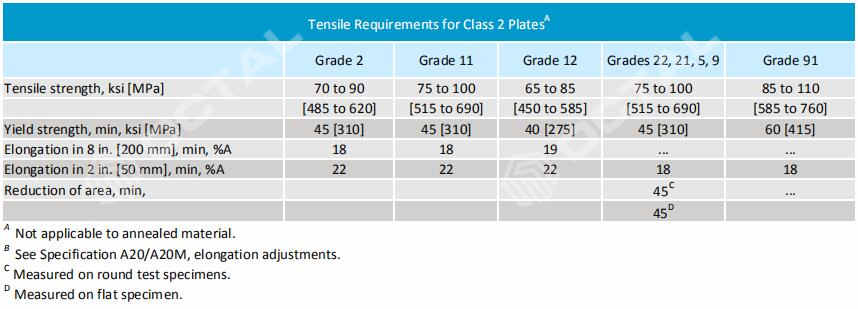
With the exception of Grades 21L, 22L, and 91, each grade is offered in two classes based on tensile strength levels as outlined in the tensile requirements tables. Grades 21L and 22L are available only in Class 1, while Grade 91 is available solely in Class 2.
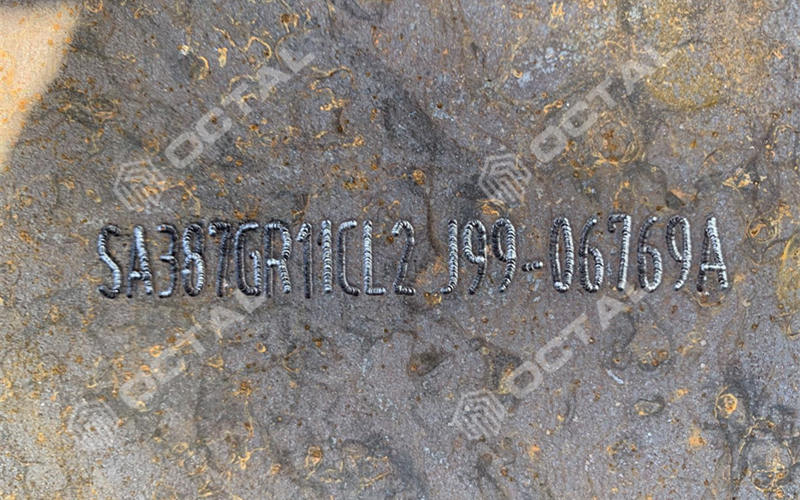
Refered Standards for ASTM A387 Alloy Steel Plate
ASTM
- A20/A20M: General requirements for pressure vessel plates.
- A370: Test specification for mechanical properties of steel
- A435/A435M: For straight-beam ultrasonic examination of steel plates
- A577/A577M: For ultrasonic angle beam examination of steel plates
- A578/A578M: For straight beam UT examination of rolled steel plates in special applications
- A1017/A1017M: Specification for pressure vessle plates of alloy steel, chromium-molybdenum-tungsten
AWS Specification
- A5.5/A5.5M: Low alloy steel electrodes for shield metal arc welding.
- A5.23/A5.23M: Low alloy steel electrodes for fulxes for submerged arc welding.
- A5.28/A5.28M: For gas shielded arc welding
- A5.29/A5.29M: For flux cored arc welding.
A387 Chrom Moly Plate Data Sheet
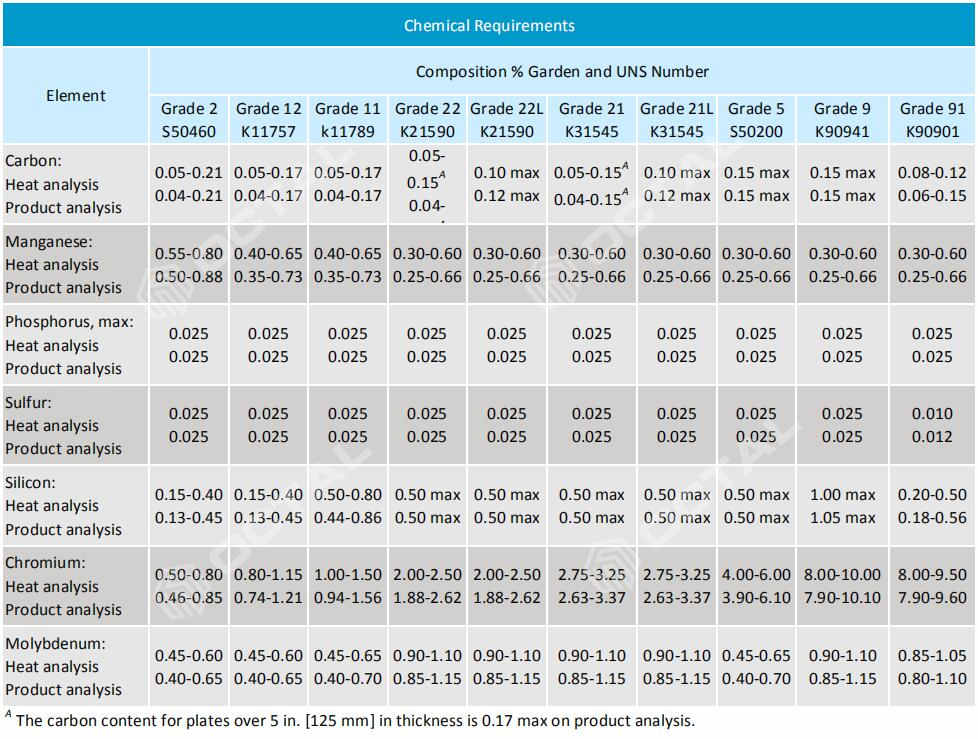
Chemical Composition
Table 1: For A387 Gr 11, 22, 5, 9, 91 Chrome Alloy Steel Plate
Mechanical Properties
Table 2: For A387 Class 1 Chrome Alloy Steel Plates:
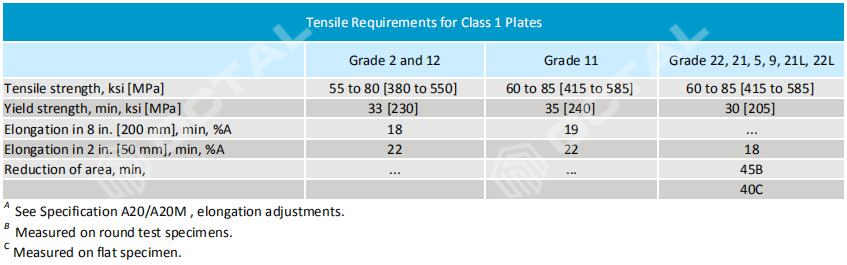
Table 3: For A387 Class 2 Alloy Steel Plates:
Heat Treatment for A387 Chrom Moly Alloy Steel Plate
Chrome moly alloy steel plates under ASTM A387 must be killed steel and are thermally treated through processes such as annealing, normalizing, and tempering. Alternatively, if agreed upon by the buyer, the plates may undergo accelerated cooling from the austenitizing temperature via air blasting or liquid quenching, followed by tempering. The minimum tempering temperatures are outlined in the table below:
Grade | Temperature, °F [°C] |
|---|---|
2, 12 and 11 | 1150 [620] |
22, 22L, 21, 21L and 9 | 1250 [675] |
5 | 1300 [705] |
Grade 91 alloy steel plates shall be heat treated by normalizing and tempering or by accelerated cooling by air blasting or liquid quenching, followed by tempering. Grade 91 plates need to be austenitized at 1900 to 1975°F [1040 to 1080°C] and shall be tempered at 1350 to 1470°F [730 to 800°C]
Grade 5, 9, 21, 21L, 22, 22L, and 91 plates ordered without heat treatment by above table, shall be finished in either the stress relieved or annealed condition.
Dfferemce between ASTM A387 Grade 11 and Grade 22
ASTM A387 Grade 22 Plate Specification
Comparison between ASTM A387 Grade 11 and Grade 22:
Composition:
- Grade 11: Contains approximately 1% chromium and 0.5% molybdenum.
- Grade 22: Contains about 2.25% molybdenum and 1% chromium. This higher molybdenum content enhances its strength and resistance to high temperatures.
Mechanical Properties:
- Grade 11:
- Minimum yield strength: 205 MPa (30,000 psi)
- Minimum tensile strength: 415 MPa (60,000 psi)
- Grade 22:
- Minimum yield strength: 240 MPa (35,000 psi)
- Minimum tensile strength: 550 MPa (80,000 psi)
Applications:
- Grade 11: Primarily used in applications requiring moderate strength at elevated temperatures, such as in boilers and pressure vessels.
- Grade 22: Typically used in more demanding applications where higher strength and resistance to creep are needed, including in power generation and chemical processing systems.
Summary:
The main differences between ASTM A387 Grade 11 and Grade 22 lie in their composition, mechanical properties, and intended applications. Grade 22 generally offers better performance under high temperatures and stress due to its higher molybdenum content, making it suitable for more critical applications compared to Grade 11.
FAQ
Q1: Can ASTM A387 Grade 22 directly replace Grade 11?
A1: No. Grade 22 has a higher Cr-Mo alloy level, but substitution must satisfy the required class, heat-treatment condition, welding procedure and project specification.
Q2: Does ASTM A387 Grade 11 or Grade 22 have a fixed maximum plate thickness?
A2: No. ASTM A387/A387M limits maximum thickness by the ability of the material composition to meet the specified mechanical properties.
Q3: Can ASTM A387 Grade 11 or Grade 22 be supplied in an untreated as-rolled condition?
A3: Not as the final untreated condition. ASTM A387 requires the steel to be killed and thermally treated to meet the applicable grade and class requirements.
Q4: Does ASTM A387 Grade 11 or Grade 22 automatically qualify for sour or hydrogen service?
A4: No. Special hydrogen or severe-service applications may require additional material, fabrication and testing requirements beyond basic ASTM A387 compliance.
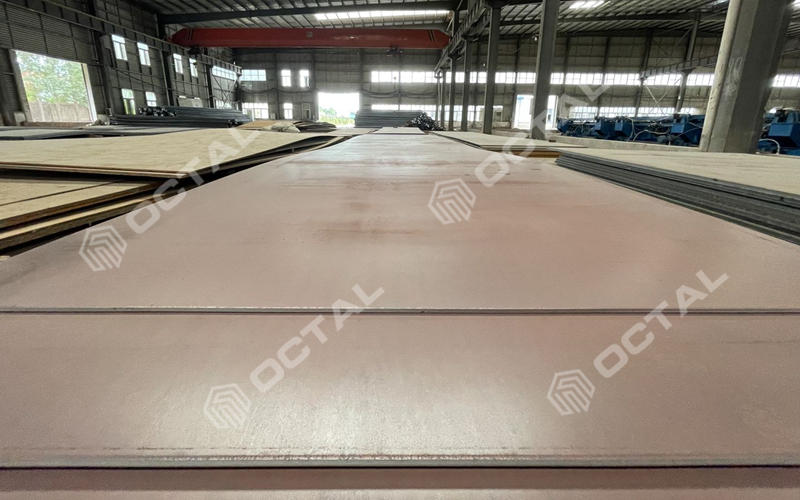
ASTM A387 Grade 22 Class 2 (ASME SA387 Grade 22)
Refered Products
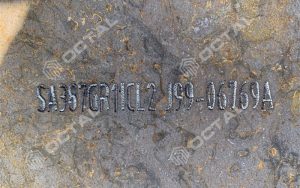
ASME SA387 GR 11 CL2
ASTM A537 Class 1, 2 Plates
ASTM A572 Grade 50, 60 Steel Plates

Laser Cut Metal Steel / CNC Laser Cutting