
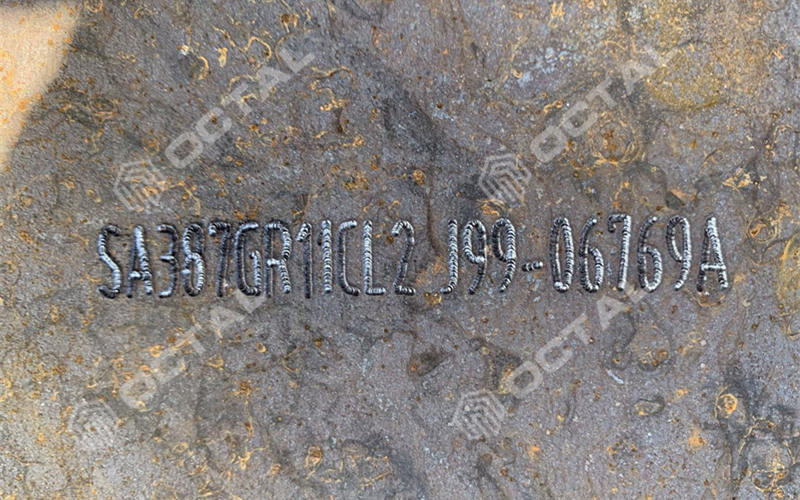
ASME SA387 Grade 11 Class 2 steel plate is a chromium-molybdenum pressure-vessel alloy steel with a nominal 1.25Cr-0.5Mo alloy system, developed for welded pressure equipment operating at elevated temperatures. Chromium contributes to the high-temperature material performance of the alloy system, while molybdenum supports strength retention under elevated-temperature service. Within Grade 11, Class 2 represents the higher tensile-strength level, with a minimum tensile strength of 75 ksi, compared with 60 ksi for Class 1. The plate is used for pressure-vessel shells, boiler components, heat exchangers, refinery vessels and other welded process equipment where elevated-temperature strength, fabrication performance and controlled heat-treatment condition are required. ASTM A387/A387M covers this Cr-Mo plate family primarily for welded boilers and pressure vessels in elevated-temperature service.
ASME SA387 Grade 11 Class 2 Supply Range
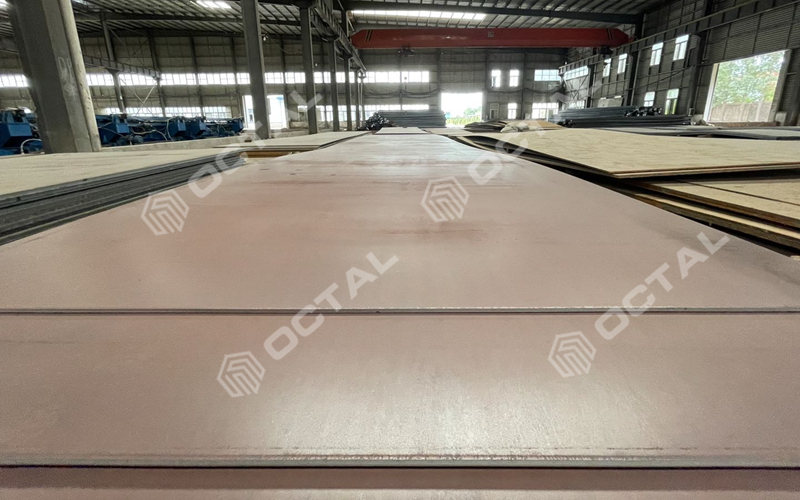
OCTAL Metals supplies ASME SA387 Grade 11 Class 2 steel plate in hot-rolled and heat-treated conditions for pressure-vessel, boiler and process-equipment fabrication. Plate dimensions, surface condition and cutting requirements can be coordinated according to the finished component and project specification.
Supply Item | Available Range |
|---|---|
Material | Chromium-Molybdenum Alloy Steel Plate |
Grade | ASME SA387 Grade 11 Class 2 |
ASTM Designation | ASTM A387 Grade 11 Class 2 |
Product Form | Steel Plate |
hickness | 5–150 mm |
Width | 600–3000 mm |
Length | 6000 mm, 12000 mm or customized |
Supply Condition | Hot rolled and heat treated |
Surface | Natural or painted |
Cutting | Laser cutting, plasma cutting and CNC cutting |
Packing | Sea-worthy packing with steel-strip securing |
Key Properties:
- Composition: ASME SA387 Grade 11 typically contains about 1% chromium and 0.5% molybdenum. This composition provides good strength and resistance to oxidation at high temperatures.
- Mechanical Properties:
- Yield Strength: Minimum of 205 MPa (30,000 psi)
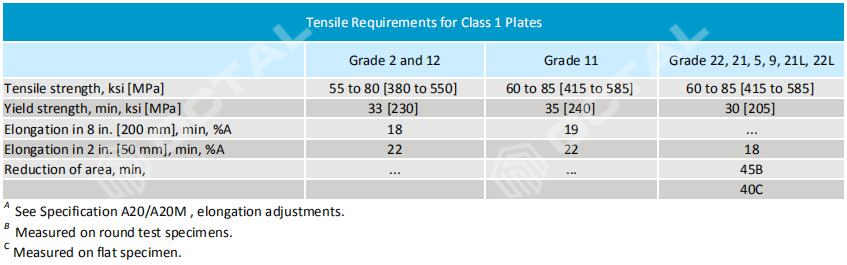
- Tensile Strength: Minimum of 415 MPa (60,000 psi)
- Class 2: This classification indicates that the material has undergone additional heat treatment, enhancing its properties compared to Class 1, which may not have the same level of treatment. Class 2 is intended for applications requiring greater performance under higher stress and temperature conditions.
Applications:
ASME SA387 Grade 11 Class 2 is commonly used in:
- Pressure vessels in the oil and gas industry
- Boilers
- Heat exchangers
- Pipelines and other equipment operating at elevated temperatures
The higher content of chromium will provide excellent corrosion and oxidation resistance, so the material could be used for sour services, and to storage oil, gas, liquid for different industries.
Refered Standards for ASTM A387 Alloy Steel Plate
ASTM
A20/A20M: General requirements for pressure vessel plates.
A370: Test specification for mechanical properties of steel
A435/A435M: For straight-beam ultrasonic examination of steel plates
A577/A577M: For ultrasonic angle beam examination of steel plates
A578/A578M: For straight beam UT examination of rolled steel plates in special applications
A1017/A1017M: Specification for pressure vessle plates of alloy steel, chromium-molybdenum-tungsten
AWS Specification
A5.5/A5.5M: Low alloy steel electrodes for shield metal arc welding.
A5.23/A5.23M: Low alloy steel electrodes for fulxes for submerged arc welding.
A5.28/A5.28M: For gas shielded arc welding
A5.29/A5.29M: For flux cored arc welding.
SA387 Grade 11, 22 Chemical Composition
Grade | Nominal Chromium Content, % | Nominal Molybdenum Content, % |
|---|---|---|
11 | 1.25 | 0.50 |
22, 22L | 2.25 | 1.00 |
5 | 5.00 | 0.50 |
9 | 9.00 | 1.00 |
91 | 9.00 | 1.00 |
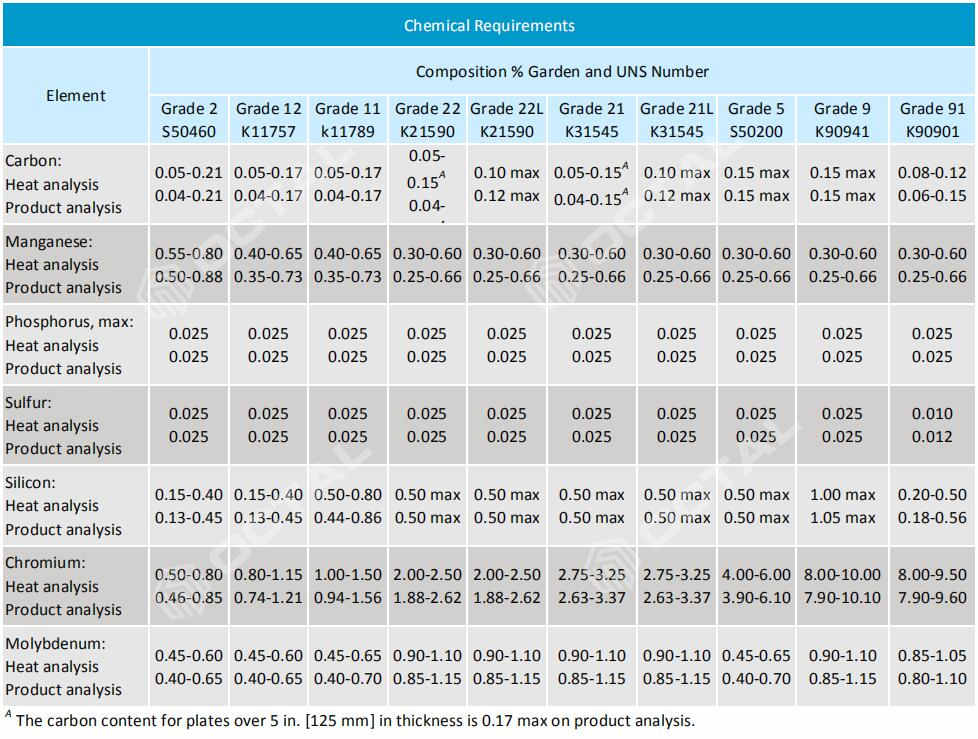
Except 21L, 22L and 91, each grade is available in two classes of tensile strength levels as defined in the tensile requirements tables. Grades 21L and 22L only has Class 1, and Grade 91 only has Class2.
Heat Treatment for ASME SA387 Grade 11 CL2
Chrome moly alloy steel plate under ASTM A387 shall be killed steel, with thermally treated either by annealing, normarlizing and tempering. Or in case agreed by buyer, accelerated cooling from the austenitizing temperature by air blasting or liquid quenching, followed by tempering, minimum tempering temperatures shall be as below table:
Grade | Temperature, °F [°C] |
|---|---|
2, 12 and 11 | 1150 [620] |
22, 22L, 21, 21L and 9 | 1250 [675] |
5 | 1300 [705] |
FAQ
Q: Does Class 2 mean a different chemical composition from SA387 Grade 11 Class 1?
A: No. Both classes use the same Grade 11 Cr-Mo chemistry. Class 2 defines a higher strength level, with a minimum yield strength of about 310 MPa and tensile strength of 515–690 MPa.
Q: Is ultrasonic testing automatically required for SA387 Grade 11 Class 2 plate?
A: No. UT must be specified by the purchase or project requirements. ASTM A435 and A578 cover straight-beam examination, while A577 provides supplementary angle-beam examination.
Q: Should repeated PWHT cycles be considered when ordering SA387 Grade 11 Class 2 plate?
A: Yes. Multiple PWHT cycles can affect final tensile properties. The expected thermal cycle should therefore be included in the material and testing requirements when repeated PWHT is planned.
Q: What should be specified when ordering SA387 Grade 11 Class 2 plate?
A: Specify the grade and class, plate dimensions, heat-treatment condition, UT requirements where applicable, fabrication or PWHT conditions, and required material and inspection documents.
Related Products
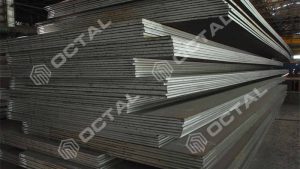
ASTM A387 Grade 11, 22, 91 Plate
ASTM A537 Class 1, 2 Plates
ASTM A572 Grade 50, 60 Steel Plates
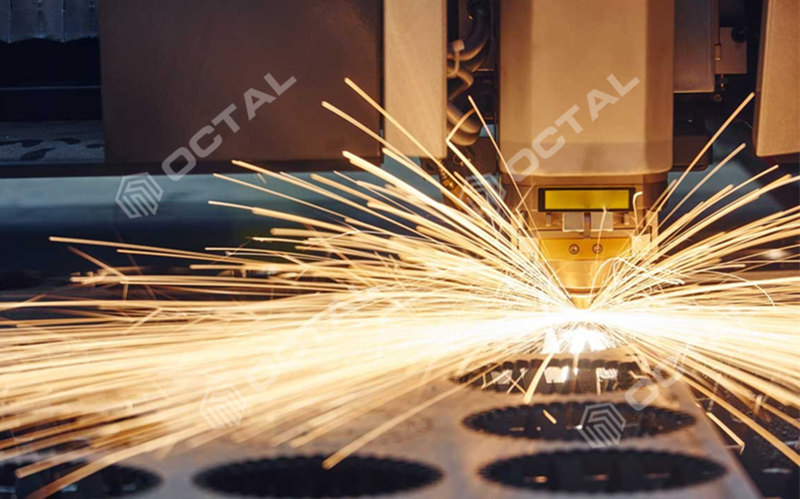
Laser Cut Metal Steel / CNC Laser Cutting
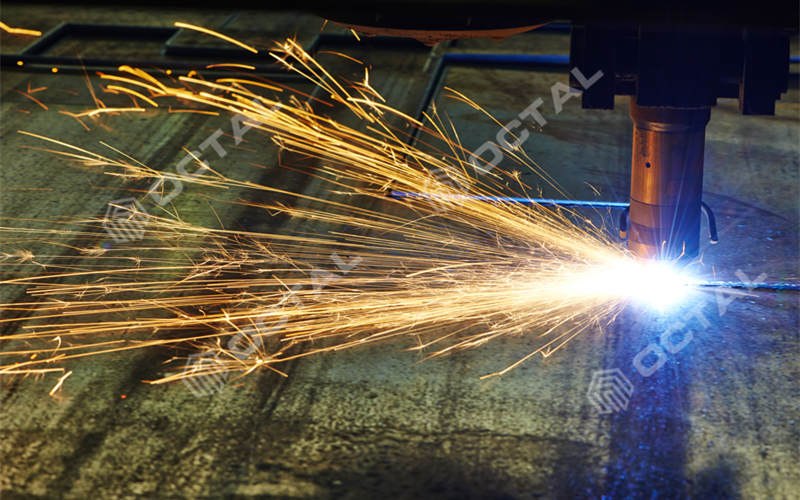
Plasma Cut / CNC Plasma Cutting Steel