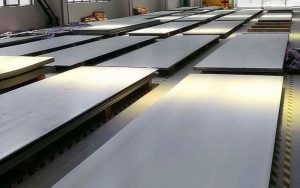
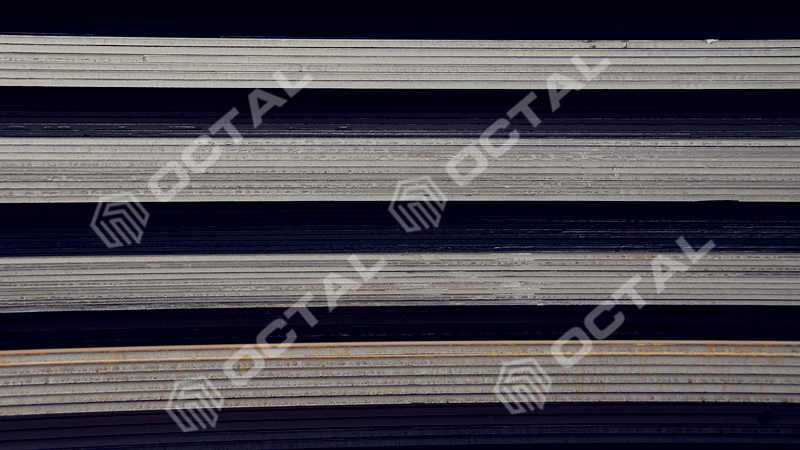
ASTM A283 Grade C and Grade D steel plates are low- to intermediate-tensile-strength carbon structural steels specified under ASTM A283/A283M for general fabrication and structural applications. Grade C has a minimum yield strength of 30 ksi (205 MPa) and a tensile-strength range of 55–75 ksi (380–515 MPa), while Grade D increases the minimum yield strength to 33 ksi (230 MPa) and tensile strength to 60–80 ksi (415–550 MPa). Grade C provides slightly higher specified elongation, while Grade D is selected where a higher strength level is required. These plates are used for structural frames, storage tanks, equipment supports, base plates and welded or bolted fabricated structures where moderate strength and straightforward fabrication are required.
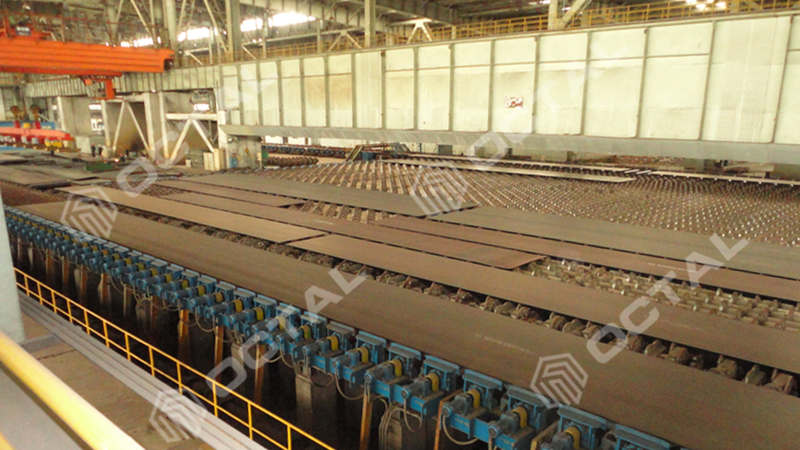
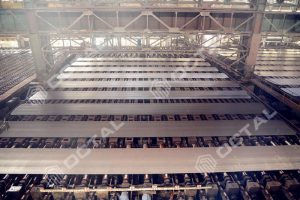
ASTM A283 Grade C Steel Plate
A283 steel plates could be produced by plate type and coil type, in case it made from coil type and furnished without heat treatment or with stress relieving only, the addtional requirements, including additional test methods and test result, shall comply with A6/A6M specification.
Reference Standards:
- ASTM A6/A6M: For general requirements for rolled structural steel bars, plates, shaples and sheet piles.
ASTM A283 Plates Data Sheet
Chemical Composition of ASTM A283 Grade C & D
Table 1:
Elements | Heat Analysis, % | ||
|---|---|---|---|
Grade C | Grade D | ||
Carbon, max | 0.24 | 0.27 | |
Manganese, max | 0.90 | 0.90 | |
Phosphorus, max | 0.030 | 0.030 | |
Sulfur, max | 0.030 | 0.030 | |
Silicon Plates 1-1/2in. [40mm] and under, max Plates over 1-1/2in. [40mm] | 0.40 0.15-0.40 | 0.40 0.15-0.40 | |
Copper, min % when copper is specified | 0.20 | 0.20 | |
Mechanical Properties
Table 2:
Grade C | Grade D | |
|---|---|---|
Tensile strength, ksi [MPa] | 55-75 | 60-80 [415-550] |
Yield point, min, ksi [Mpa] | 30 | 33 [230] |
Elongation in 8 in. [200 mm], min, %B | 22 | 20 |
Elogination in 2 in. [50mm], min, %B | 25 | 23 |
B: For plates wider than 24 in. [600 mm], the elgonation requirement is reduced 2%.
Key Differences:
- Carbon Content and Strength: Grade C limits carbon to 0.24% maximum, compared with 0.27% for Grade D. Grade D, however, provides higher specified yield and tensile strength.
- Mechanical Properties: While both grades share similar yield and tensile strengths, the elongation percentage differs, with Grade C typically exhibiting higher ductility.
Applications:
Both ASTM A283 Grade C and D plates are used in:
- Construction of bridges and buildings.
- Manufacturing of structural components and equipment.
- Production of pressure vessels and storage tanks.
- General fabrication and structural applications where moderate strength is sufficient.
Manufacturing Process of ASTM A283 Grade C & D Plate
The steel shall be killed and made by one or more of the following processes:
- Open-hearth
- Basic-oxygen
- Electric furnace
General Requirements for Delivery
ASTM A283 plates shall comply with A6/A6M, coils are exlcuded from this specification until they are cutted to finished plates.
Supplementary Requirements under A283
These are not applied unless agreed by the buyer and seller, which listed in Specfication of A6/A6M.
S2. Product Analysis
S3. Simulated Post-Weld Heat Treatment of Mechanical Test Coupons.
S5. Charpy V-Notch Impact Test
S6. Drop Weight Test (For thickness equal and above 16mm [0.625in])
S8. Ultrasonic Examination.
S15. Reduction of Area.
Our Supply Range:
Description: Carbon Steel ASTM A283 Grade C & D
Manufacturing Types: Hot Rolled
Thickness: 2 to 150 mm
Width: 0.6m to 3m
Length: 6m, 12m, customized
Surface: Natural, Painted
Packing: Standard sea packing, bundled with streel strip.
FAQ
Q1: Is ASTM A283 Grade C or D a pressure-vessel steel plate?
A1: Not by specification alone. ASTM A283 is a structural-quality carbon steel plate specification for general applications. Pressure-vessel use must be confirmed against the governing design code and project requirements.
Q2: Can ASTM A283 Grade D automatically replace Grade C?
A2: No. Grade D provides higher specified strength but also has a higher maximum carbon content and lower minimum elongation. Substitution should be verified against the structural design and fabrication requirements.
Q3: Are Charpy impact testing and ultrasonic testing mandatory for ASTM A283 plate?
A3: No. They are supplementary requirements and should be specified when the project requires defined impact toughness or internal plate examination.
Q4: Can steel cut from coil be certified directly as ASTM A283 plate?
A4: Only after it has been processed into finished plate and the required inspection and testing are completed. Coil chemistry alone does not establish finished-plate compliance.
Related Products
ASTM A285 Grade C, B, A Plates
ASTM A516 Grade 70, 65, 60 Steel Plate
ASTM A515 Grade 60, 65, 70 Plate
ASTM A537 Class 1, 2 Plates
ASTM A572 Grade 50, 60 Steel Plates
AH36, DH36, EH36 Shipbuiding Steel Plates
Carbon Steel Plate